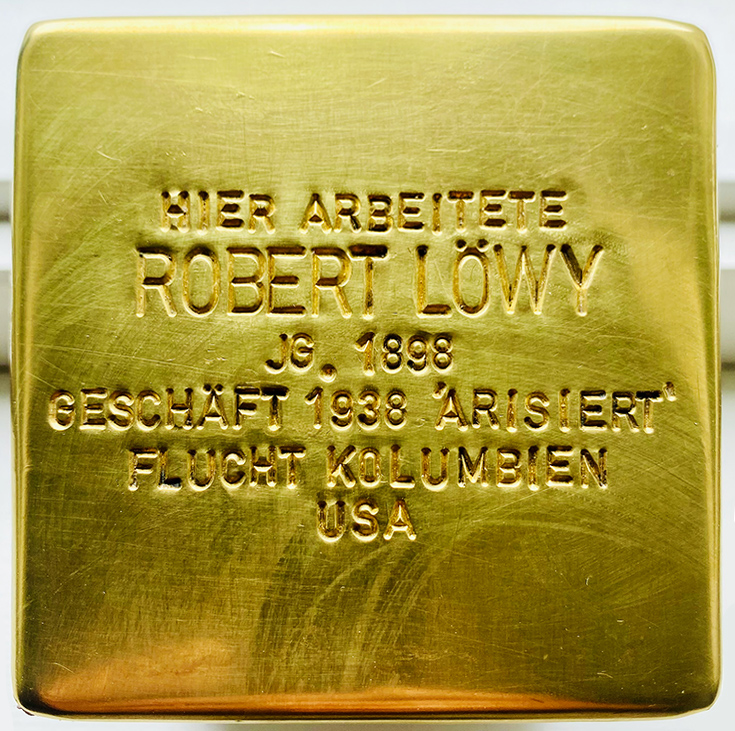
The brothers Robert and Paul LÖWY, were both born in Salzburg towards the end of the 19th century – one on January 4, 1898 and the other on May 27, 1899. They were two of the six children of Amalie LÖWY née Fuchs, und Oswald LÖWY – one of the approximately 50 Jewish families who were able to acquire »Heimatrecht« [local citizenship rights] in the city of Salzburg under the Austro-Hungarian Monarchy.
From 1896 to 1938 – for over four decades – the Amalie and Oswald LÖWY family business, selling haberdashery, knitwear and toys, was located on the ground floor of the building at 6 Mirabellplatz. Their shop first appeared on the boycott list published in the Salzburg Antisemitic League’s hate-filled newspaper Der eiserne Besen (The Iron Broom) in September 1923 – the League boycott campaign aimed to destroy the existence of all Jews in Salzburg and Austria.
Until June of 1938 the LÖWY family lived on the 2nd floor of number 12 Franz-Josef-Straße, in the middle class Andrä Quarter – not far from the Salzburg Synagogue on the Lasserstraße.
Oswald LÖWY, like his older brother Rudolf, was an active member of the Salzburg Jewish Community Organization until his death at age 66 on January 15, 1935. He was buried in the Salzburg Jewish cemetery in Salzburg-Aigen (death notice in the Salzburger Volksblatt, January 17, 1935, p. 12).
Oswald’s oldest son Ludwig LÖWY, born in Salzburg in 1896, was supposed to continue running the business, but he was severely injured in a serious car accident and was unable to work. Ludwig died at the age of 42 on January 30, 1939, in the Jewish hospital at 9 Seegasse in Vienna’s 9th district.
So, it was up to the younger brothers Paul and Robert LÖWY to take over the business of their deceased father at 6 Mirabellplatz. The marriages and births of their families were registered with the Jewish Community of Salzburg:
- Paul and Johanna LÖWY had a daughter: Margit, born in Salzburg on June 23, 1924, so just 14 years old in 1938.
- Robert and Lydia LÖWY had a son: Walter, born in Salzburg on April 9, 1931, so just seven years old in 1938.
Under the Nazi regime, the LÖWY family’s livelihood was destroyed; their business on Mirabellplatz was forcibly closed, looted and »Aryanized« – a photograph taken by the Nazi Franz Krieger shows a Nazi Storm Trooper with a swastika armband in front of the entrance to the shop with Paul LÖWY behind him in the narrow shop doorway and the sign »Jewish shop« pasted on the shop window – the premises later served as a shoemaker’s workshop.
The members of the LÖWY family was evicted from their apartments on Franz-Josef-Straße and had to say goodbye to each other. Mother Amelie LÖWY, who had lived in Salzburg for 44 years, and her sons would never see each other again.
In June 1938, the 63-year-old widow Amalie LÖWY fled to her daughter Grete and her sister Jenny 1 in Prague Czechoslovakia, which was still free, but which was occupied by German troops on March 15, 1939.
Eighty-one Královská in the 10th district of Prague was the last freely chosen address of Amalie LOEWYOVÁ. At the age of 67 she was deported to the Theresienstadt concentration camp in 1942. From there she was sent to the Zamość ghetto in Poland and later she was murdered in one of the Nazi extermination camps – the place and date of her death are unknown.
What is certain is that the families of Paul, Robert, and Emil LÖWY successfully escaped to Colombia. In 1938 Emil LÖWY was a graduate of the Vienna University of Technology and had worked as a chemist for the Austrian rubber company Semperit until he escaped. He founded a balloon company called Sempertex in Barranquilla on Columbia’s Caribbean coast; today it is a thriving global company.
The Paul and Robert LÖWY families did not stay in Colombia, they emigrated to Portland Oregon on the Pacific coast of the United States, where they received US citizenship in 1954.
Paul LÖWY died in Wenatchee Oregon at age on November 27, 1974 (Cemetery River View in Portland). His brother Robert LÖWY died in Portland at age 80 on March 1, 1978 (Cemetery Neveh Zedek).
The grave of their father Oswald LÖWY, who died in Salzburg in 1935, no longer exists – it was destroyed by the Nazi regime, as were the records of the Jewish community of Salzburg containing the birth records of Margit and Walter LÖWY.
Thanks to the initiative of Marko Feingold, President of the Jewish Community of Salzburg and editor of the book »Ein ewiges Dennoch: 125 Jahre Juden in Salzburg« surviving expelled Jews and their families were invited to Salzburg in August 1993.
Among the guests were Paul LÖWY’s 90-year-old widow Johanna (Hansi) and their daughter Margit LÖWY Comer, born in Salzburg in 1924; their cousin Walter LÖWY, who was the son of the deceased couple Lydia and Robert LÖWY and who had been born in Salzburg in 1931, along with his wife Suzanne Ruth LÖWY and their children Lisa Sandra and Brian Philip – three generations – from their home in Portland, Oregon.
In the summer of 2011, Kenneth LÖWY, son of Dipl-Ing. Emil LÖWY, who had died in Barranquilla in 1980, visited Salzburg with his family. They visited the stolen home of his family the former family store at 6 Mirabellplatz, and 12 Franz-Josef-Straße where there has been a Stumbling Block for Amalie LÖWY since June 2009.
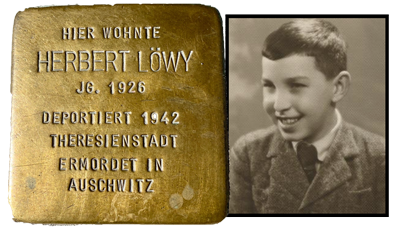
The first Salzburg Stumbling Blocks were laid in front of the house at Linzer Gasse 5 by the artist Gunter Demnig in August 2007, in the presence of the President of the Jewish Community of Salzburg, Marko Feingold, and his wife Hanna – they were for Oswald LÖWYs nephew Ernst LÖWY, his wife Ida and their son Herbert, who had all been murdered in Auschwitz.
Sources
- Jewish Community Organizations of Linz (Birth register), Vienna (June 1938, Applications »Emigration«) and Salzburg (Birth and Marriage registrations destroyed by the Nazis)
- Registry Office Buttenwiesen (Family of Julia and Ludwig Fuchs)
- City and State archives of Vienna and Salzburg (police registration files, business records, local citizenship register, and the Franz Krieger photo archive
- Arolsen Archives, Dokumentations archives of the Austrian Resistance and Yad Vashem (Shoah-Opfer)
- Marko M. Feingold, ed., Ein ewiges Dennoch. 125 Jahre Juden in Salzburg, Vienna 1993
- Gert Kerschbaumer: »Geschichte schreiben nach Auschwitz«, in Die Gemeinde, offizielles Organ der IKG Wien, Nr. 428, October 6, 1993
- Information provided by Kenneth Löwy, Barranquilla, Columbia
Translation: Stan Nadel
Stumbling Stone
Laid 06.10.2026 at Salzburg, Mirabellplatz 6
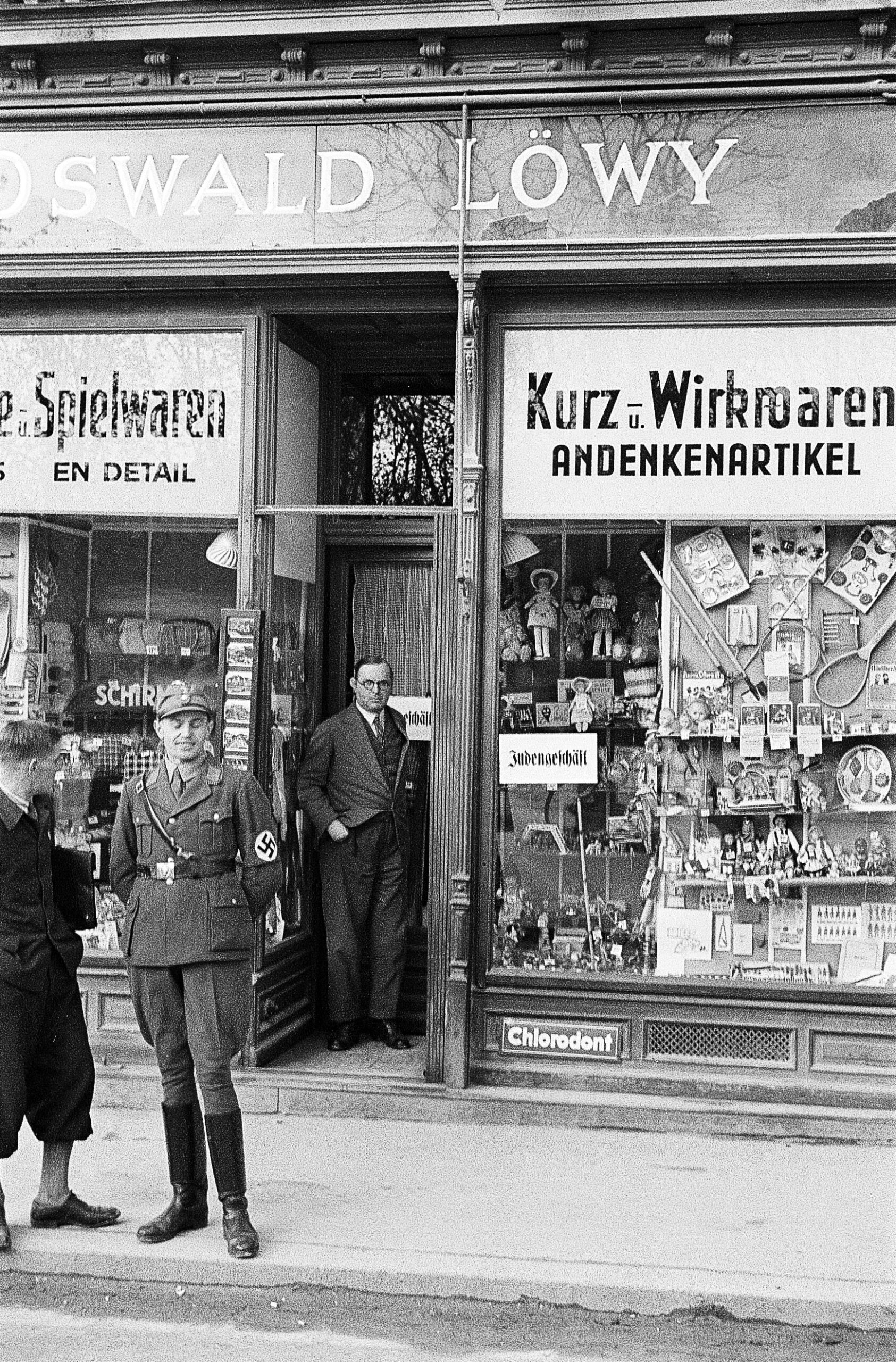 Oswald Löwy's Store, Mirabellplatz 6 (in 1938, with Paul Löwy in the entrance, labeled »Jewish Store«)
Photo: Salzburg City Archives, Franz Krieger Photo Archive
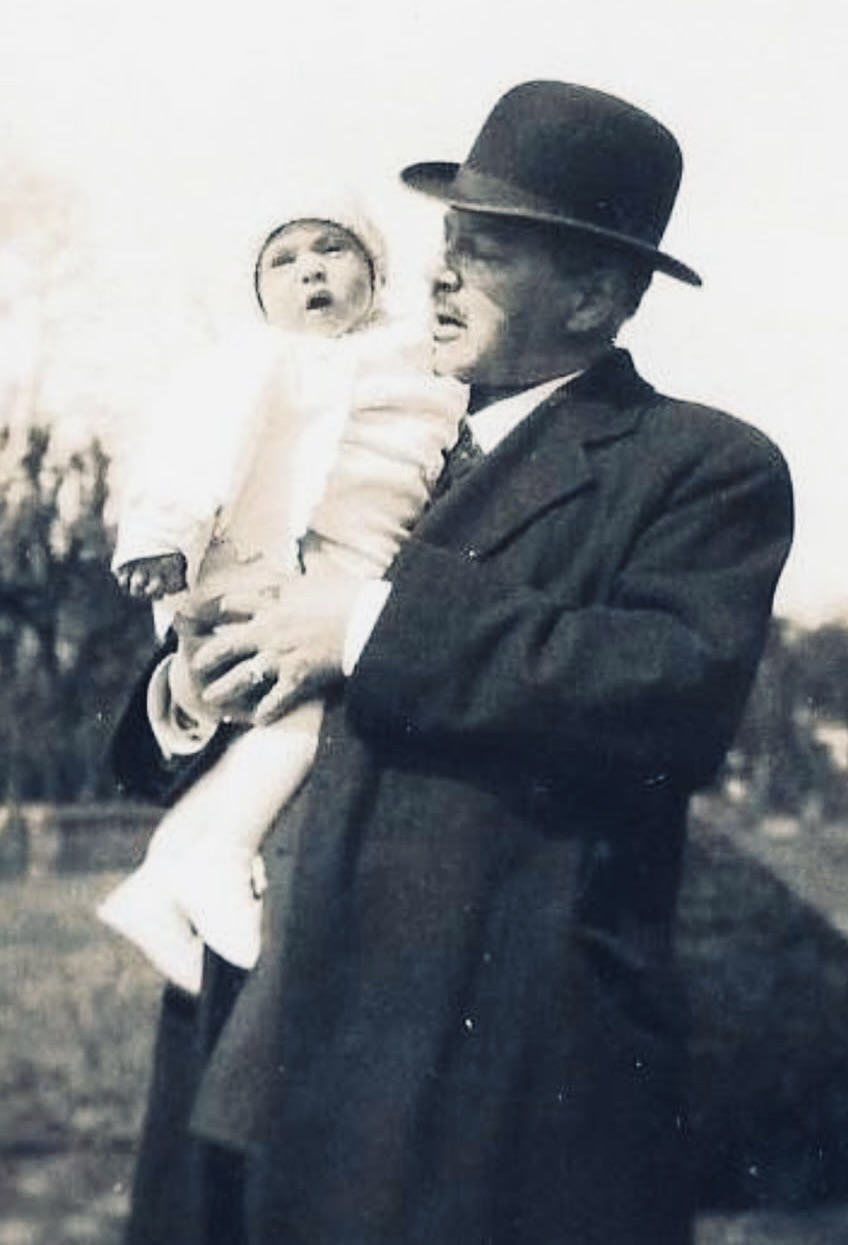 Oswald Löwy with his son Robert
Photo: private collection
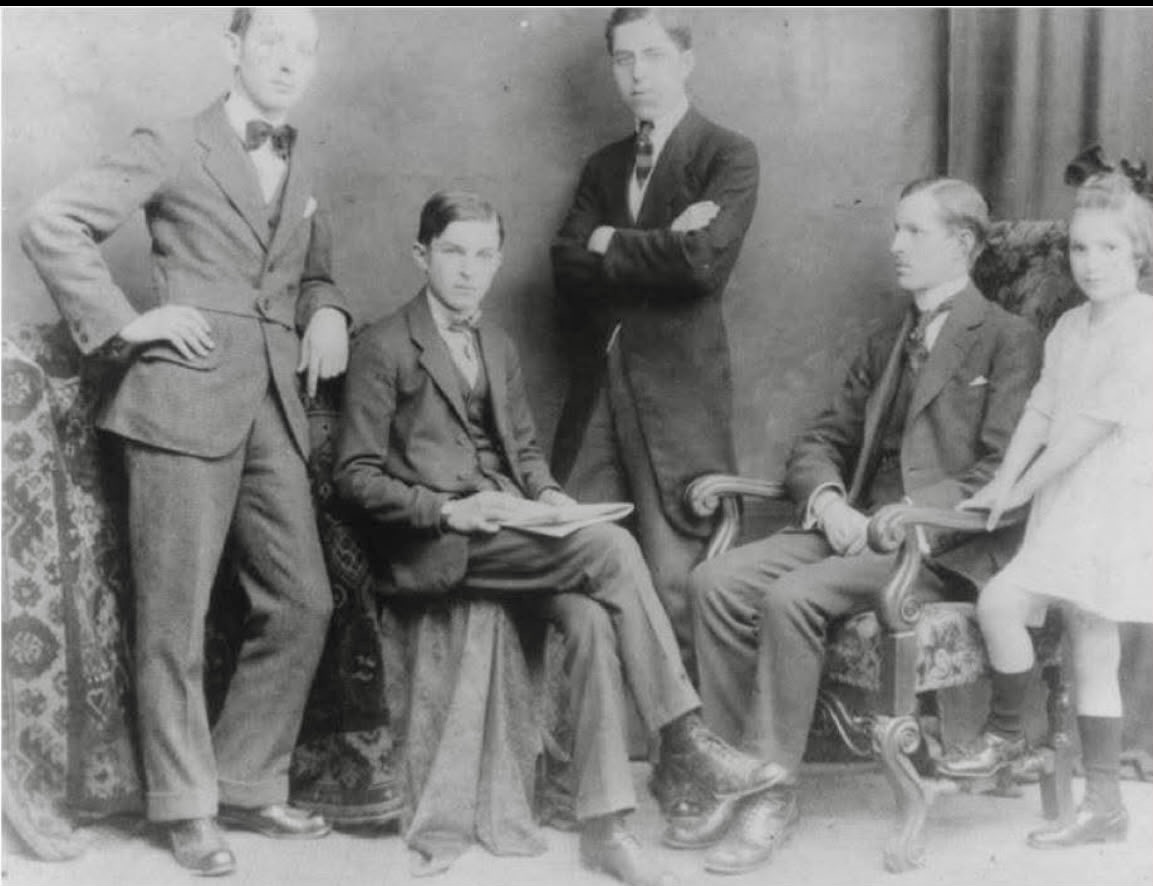 Siblings Robert, Emil, Paul, Ludwig, & Grete Löwy
Photo: private collection
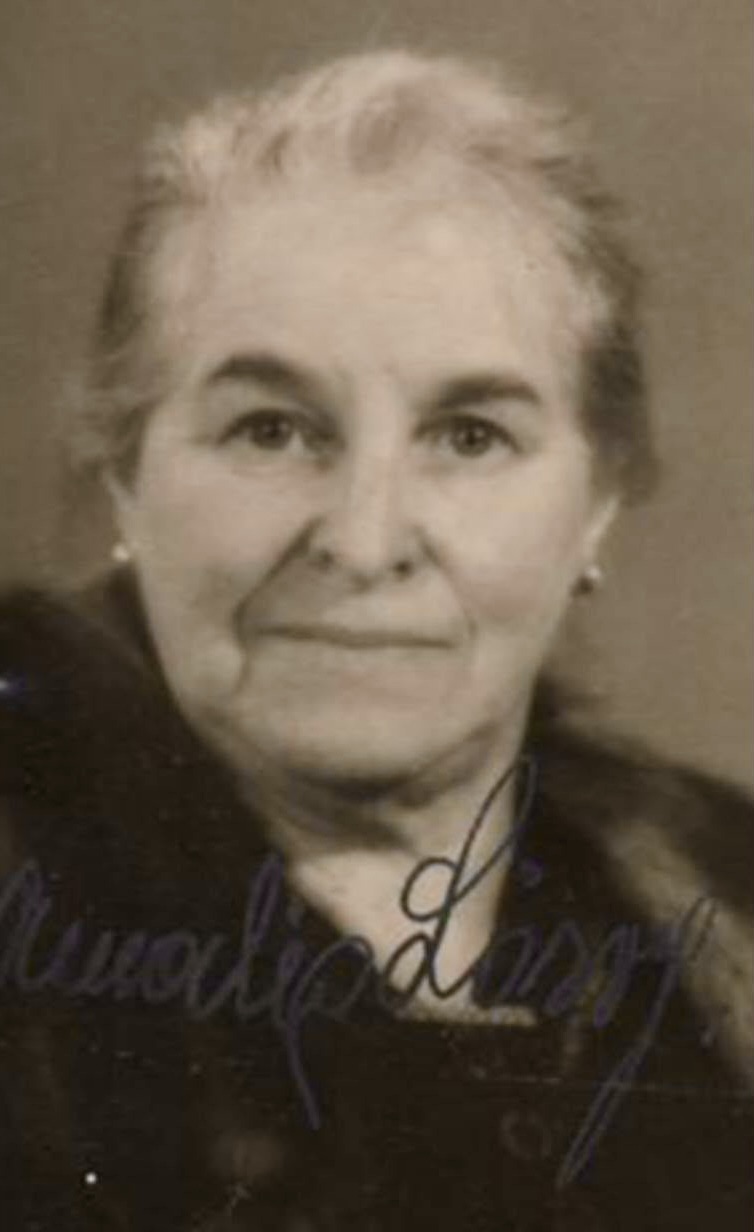 Mother Amalie Löwy
Photo: private collection